
Truth Talks: Morning reflections with Josie West, Chief Innovation Officer
Last year, we brought twenty senior technology leaders together for breakfast in London. Chief Data Officers, IT Directors, Heads of AI – executives who share a common challenge of separating genuine AI opportunity from overwhelming noise.
What emerged from the morning was refreshing honesty about where organisations actually are in their AI journey.
Josie West, FOILs Chief Innovation Officer, reflects on the event.
Firstly, it’s a pleasure to see a room of 20 people fully engaged, reflective and quite frankly, with brutal honesty about what’s going on for them. We thought we left enough time for dialogue across the room, we could have done with another hour. Here are my takeaways from the morning.
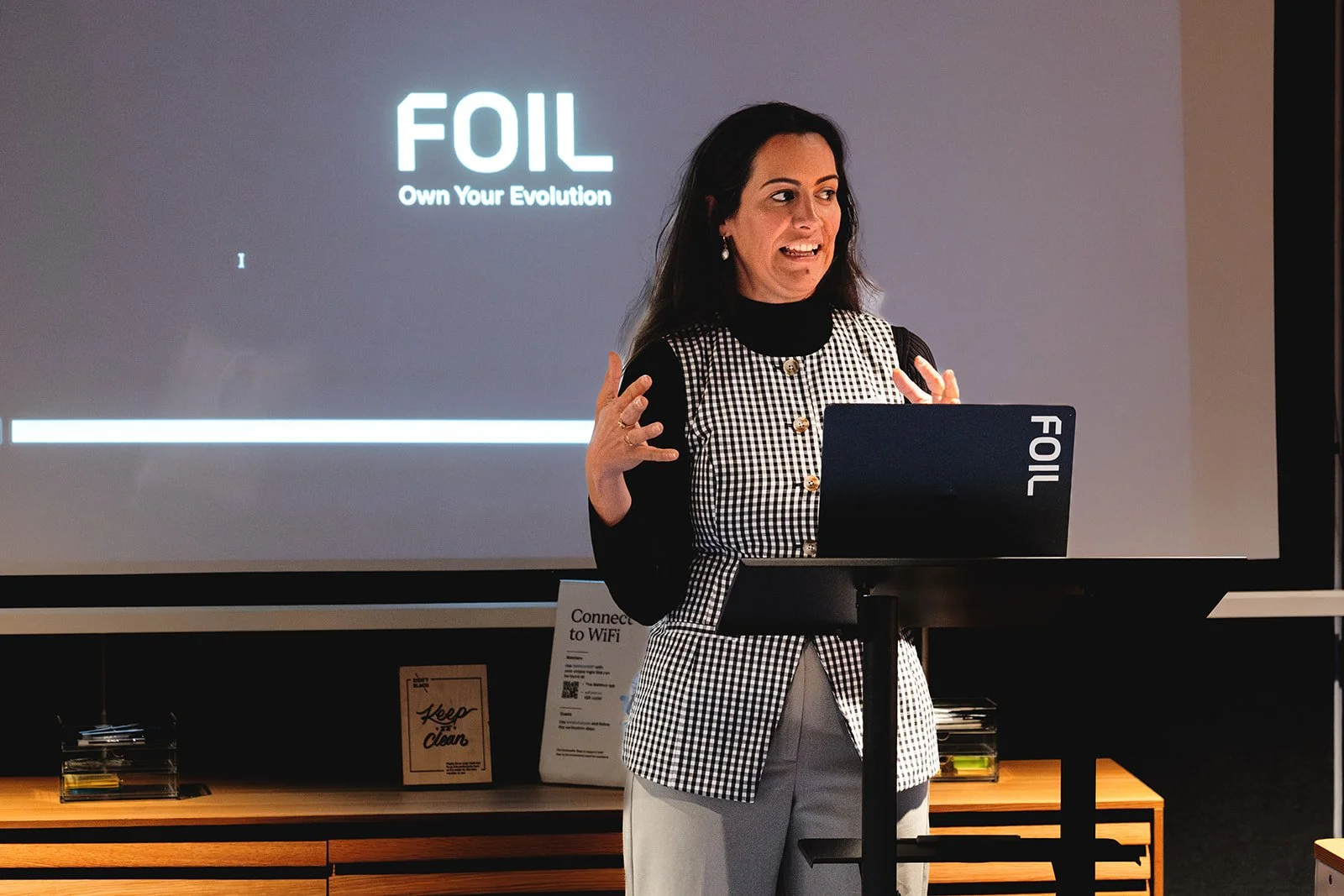
Honest conversation about progress
It was a long term client of FOIL that started saying: "Everyone isn't as far down the AI journey as they'd like to be."
Unsurprisingly, that was the opener to the floodgates.
A Director from a major payments company was refreshingly direct: "I'm spending considerable time evaluating use cases, saying no often. We delivered four last year but rejected 80%."
An IT Director from an Insurance client: "Data quality remains our fundamental challenge. We haven't really engaged with data governance."
A Chief Data Officer nodded along: "I run a governance forum. It's challenging to implement effective governance when underlying data quality is poor."
What was refreshing was these weren’t highlighted to one another as failures, this is where most organisations actually are right now—somewhere between figuring it out and moving little bits forward.
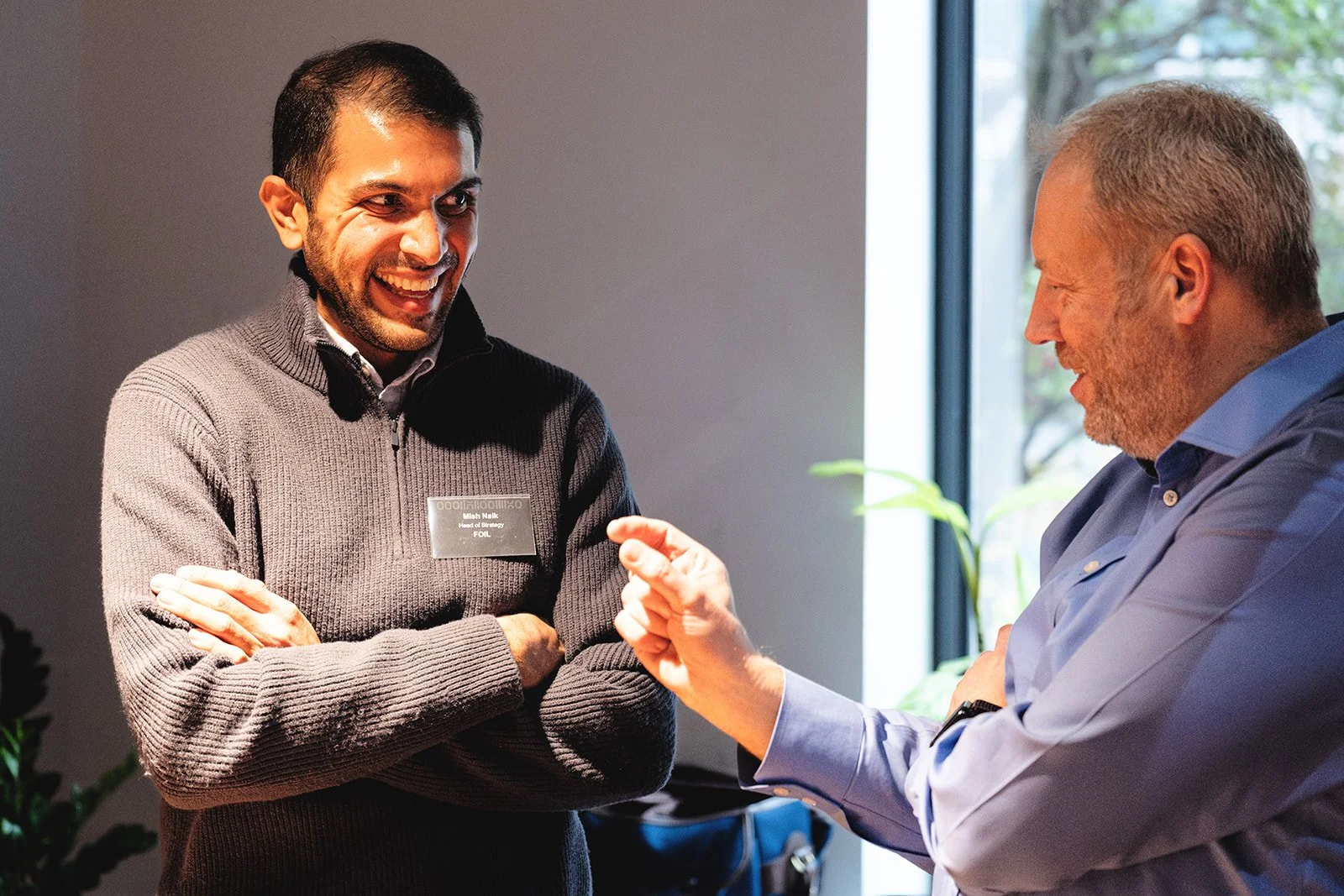
Mish Naik, FOIL Head of Strategy | Supporting the framing of why, not what
Most organisations are the wrong questions
A pattern of the morning kept showing up: all teams are starting to drown in AI requests, but with no framework to evaluate them. It’s the classic, "AI is the answer, what is the question?"
We see this more and more.
There is clearly an inflated expectation about what AI can actually do. Teams are trying to move fast, while compliance and business as usual slow everything down. And a lot of buzzwords covering up the fact that nobody's quite sure what problem they're solving.
We challenged the room to reframe it entirely. Rather than how do we do more AI, what would we do if we started again? How would you do things differently?
If your people don't trust the data, little else matters
Trust is so important in this changing environment. Trust that AI is not hallucinating, yes, but even more than that, trusting the data behind it. If your people don't trust the data, they won't use it. And if they don't use it your AI becomes expensive shelf-ware.
One of our guests shared that they use an external partner to provide the data, cleaner than their own. It showed their team how broken their own systems were, but more importantly it showed them the art of the possible if it were fixed. Confronting the problem directly, not dancing around it, became the catalyst for change.
Data quality accountability isn't just your problem. It's everyone's problem across the entire value chain.
But unconventionally, it can’t prevent you from moving forward. Good data quality is a term that no data leader has claimed, ever. So if you let it halt you entirely, you will be behind. Finding a way to improve as you go is so important here.
We introduced FOIL’s new concept, the Autonomic Business
We brought up autonomic businesses—organisations that sense, respond, and adapt with minimal human intervention. It's something we're experimenting with at FOIL, and where we think AI innovation is heading.
As expected, reactions were all over the map.
Some saw immediate applications of data and decisions coming to you, not the other way around. Others got the concept but weren't sure how it would work: "I understand it intellectually, but technically, it doesn’t seem possible."
What everyone agreed on was the importance of a foundation to rethink your processes to get real value from AI.
That's what autonomic businesses force you to do. Strip out the manual handoffs, the approval bottlenecks, the "we've always done it this way" thinking. The technology is the easy part. The process redesign is difficult because of the people needed to lean into that opportunity.
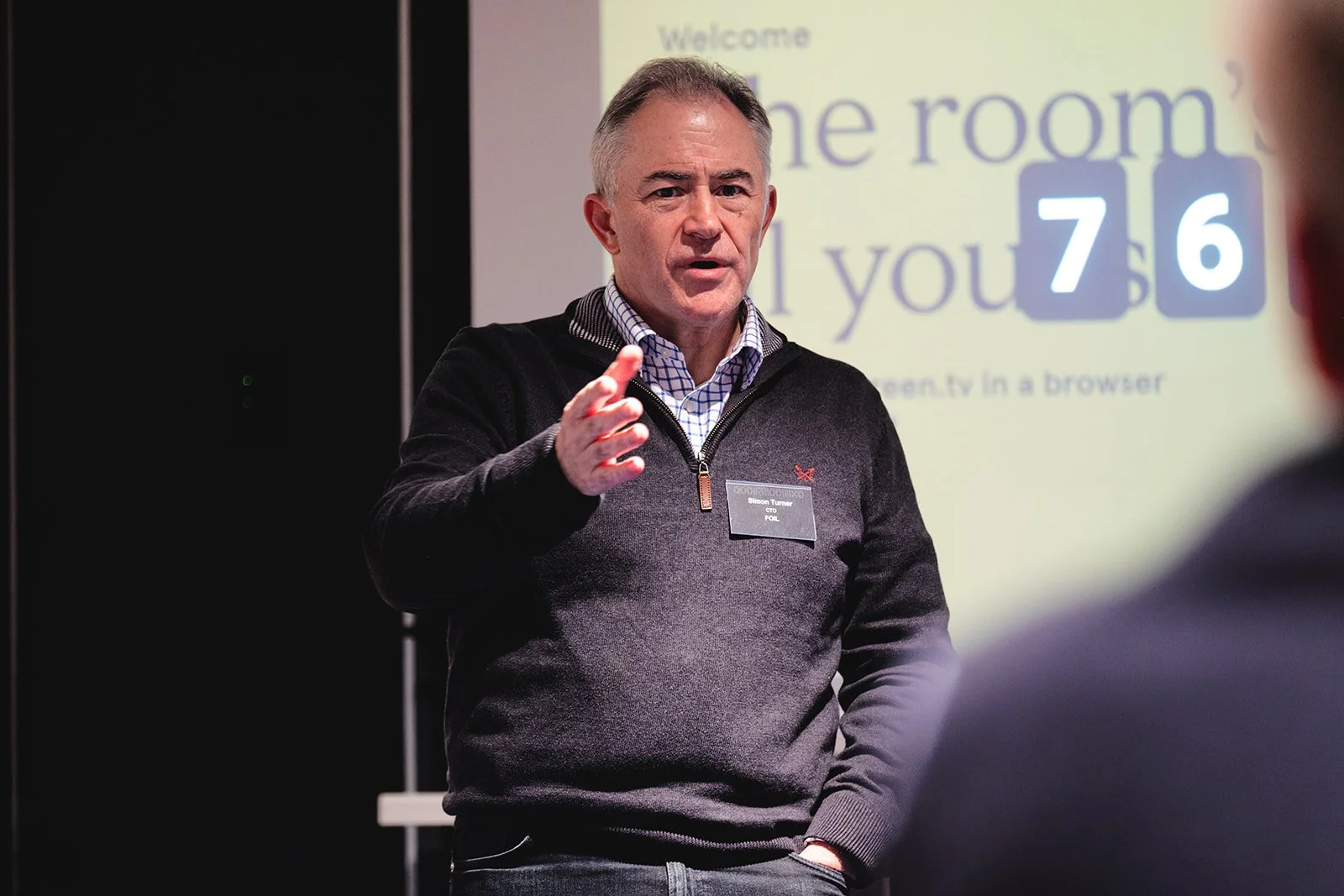
Simon Turner, FOILs CTO | Explaining the concept of an autonomic business
Finding your competitive edge
Through all this noise, it’s more important than ever for leaders to understand their competitive edge (and of course agree on it). Not what AI tools to buy. Not what your competitors are doing. But what unique intelligence already exists inside your walls?
We asked the question on the day and the answers were what we have heard time and time again:
Unstructured data sitting in silos nobody's connected yet.
Qualitative insights buried in legacy reports that would be hard to collectively read.
Tacit knowledge living in people's heads and hallway conversations.
Historical context that never gets captured systematically.
One of our guests, an Insurance CIO made an important point: "Differentiation doesn't only come from data and AI. It comes from how you deliver and engage better with clients."
Culture. Relationships. Execution. The fundamentals that will create lasting advantage for organisations.
Everyone has access to similar tools. The winners will be those who ask better questions to elevate their unique selling point more effectively - and importantly, don’t go against the value proposition of your business.
Turning this into action
Chasing individual AI wins without building foundational capability just creates technical debt and unsustainable solutions. We discussed what needs addressing:
Governance frameworks that drive accountability, instead of the classic tick-box compliance.
Data quality that's reliable enough to build on with confidence.
A culture of curiosity where teams have space to explore opportunities without fear of failure.
We closed by asking: what's one action you'll take forward and the responses were pragmatic. Some committed to "keep pushing"—sometimes persistence is the strategy. Others focused on strengthening data governance fundamentals.
We all agreed with more experimentation—permission to learn through doing.
My takeaways from the morning
A few things became clear take aways but perhaps the most important was that to move beyond the noise requires understanding where it originates.
Sometimes it's vendor hype. Sometimes it's board pressure. Sometimes it's our own fear of falling behind. Asking ‘why AI’ before proposing which AI, is the most important considerations all leaders should start with.
When you create space for honest dialogue, it’s amazing how we stop presenting and instead get into the nuts and bolts of knowledge, sharing, and problem-solving collaboratively.
That’s what we’re aiming to build through these events. A space for the conversations that drive progress, with the collective experience of leaders working through these challenges daily.
I hope to see you at the next one - sign up here.
Josie
Connect with Josie on LinkedIn. FOIL Truth Talks bring together technology leaders who ready to move beyond AI theatre toward practical implementation. No presentations. No sales pitches. Just honest conversation about what's working, what's challenging, and what we're learning together.
Interested in joining the next one? Check out whats on and register here!